Gemstone screening
Discover what your gemstone could be.
Add clear photos to explore likely matches, inspect visible features and understand which checks can confirm the result.
AI-assisted screening. Authentication and formal grading require appropriate testing.
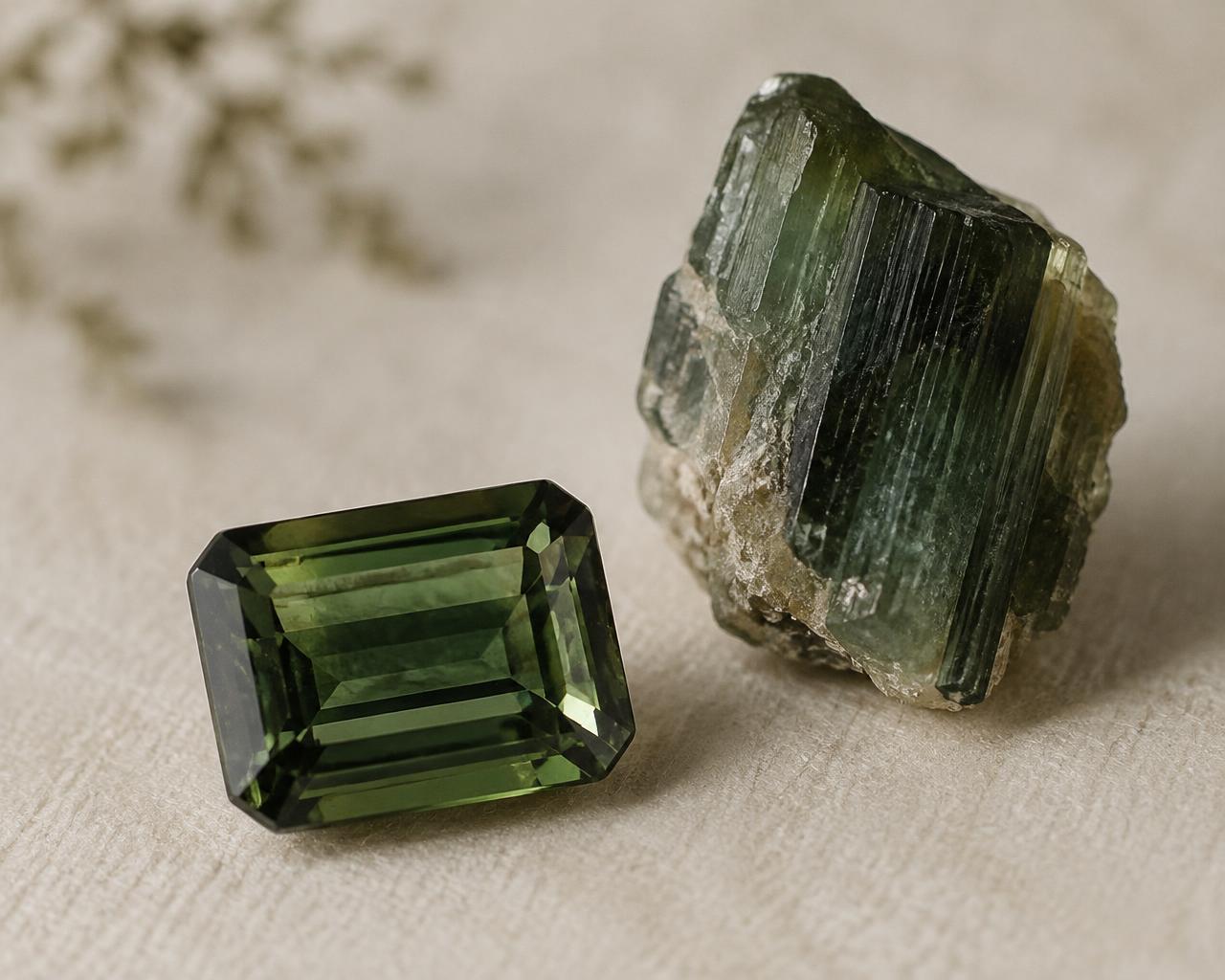
Add 1–5 photos of one specimen
JPEG, PNG or WebP · up to 10 MB each · 30 MB per scan
Optional details you know first-hand
Tell us what you measured yourself, what someone told you, and what a report says — we keep these separate.
Privacy: photos are used only for your scan, location data is removed before upload, and nothing is used for training unless you opt in. Guest scans are deleted after 24 hours.
What you get
Evidence, not a verdict.
Explore likely matches
Compare candidate identities and the observations that support or weaken each one.
Inspect visible condition
Record chips, surface wear, apparent colour and features visible in your photographs.
Understand verification
See which questions need measurements, microscopy or a laboratory report.
Build your collection
Keep photographs, notes and supporting documents together as you learn more.
Three different questions
Identity, origin and treatment are separate. A photo can help with the first; the others usually need testing.
Natural
Formed by nature. May still be treated.
Laboratory-grown
Same material, grown by people. A lab-grown diamond is diamond.
Imitation
A different material made to look like something else, such as glass sold as ruby.
Specialist identifiers
All 34 toolsGemstone identifier
Investigate a gem from several angles.
Gem identifier (jewellery)
Explore the stone in your jewellery.
Diamond identifier
Screen a diamond-like stone.
Ruby identifier
Investigate a red gemstone.
Amethyst identifier
Explore a purple crystal or gem.
Pearl identifier
Inspect the visible character of a pearl.
Turquoise identifier
Examine a turquoise-like stone.
Jewellery identifier
Document the details of a jewellery piece.